


Housing Didn’t Save My Family — And It Won’t End America’s Homelessness Crisis

My mother, Mysti, died while living on Section 8 and relying on food stamps. A result of generational poverty.
But if you only hear that sentence, you miss the most important part of the story.
My mother fought every day as a single mother to give her children a better life. She drove big rig trucks. She worked whatever jobs she could find. She had a criminal background. However, she shielded us from the worst parts of poverty whenever she could. It made her a powerful woman in the end. Like millions of parents living on the edge of America’s safety net, she did everything she could to move her family forward.

And in many ways, she succeeded.
Her kids went on to earn college degrees — including bachelor’s and master’s degrees — despite growing up in conditions that often felt one step removed from homelessness.
I’ve faced eviction. I’ve lived in my car. I was on probation, and later in life, I worked as a probation officer. I grew up in Seattle and Los Angeles. I graduated from Dorsey High School in Los Angeles, a school shaped by the same structural inequalities that still affect many communities across America.
The apartments that my friends and I lived in often felt barely different from the street outside. Roaches. Mold. Cold. Broken infrastructure. Helicopters putting the neighborhood to sleep. Gunshots sounding like the 4th of July, daily. Conditions that many Americans never see, but millions quietly endure.
For families like mine, housing instability is not an isolated event. It is generational.
My family history stretches back to my great-great-grandmother, who was born into slavery. Generations later, my grandmother became the first Black principal in Seattle Public Schools. Our family’s story reflects something fundamental about the American experience: progress rarely happens without struggle.
If my family had simply accepted the conditions placed before us, none of that progress would have happened.
We fought.
That experience is why I struggle with the growing narrative that America’s homelessness crisis can be solved with a single policy idea: simply giving people housing and expecting everything else to fall into place.
Housing matters. But housing alone will not end homelessness.
The Numbers Tell a Different Story
According to the U.S. Department of Housing and Urban Development, more than 771,000 people experienced homelessness in the United States in 2024, the highest number ever recorded in the nation’s annual point-in-time count.
At the same time, federal, state, and local governments have invested billions of dollars in expanding housing programs and homelessness services.
If housing alone were the answer, those numbers should be falling.
Instead, they continue to rise.
The reality is that homelessness in America is rarely just a housing problem. It is often a complex intersection of addiction, generational poverty, racism, discrimination, untreated mental illness, trauma, chronic illness, and deep social isolation, and more.
Housing can stabilize an address.
It does not automatically stabilize a life.
The Promise — and Limits — of Housing First

Over the past two decades, the dominant strategy in U.S. homelessness policy has been Housing First, a model that places individuals directly into permanent housing without requiring sobriety or treatment participation beforehand.
The philosophy behind Housing First is compassionate. People should not have to prove they are “ready” for housing before receiving it.
But an often overlooked part of the model is the separation of housing from services.
Once someone is placed in permanent supportive housing, they cannot be required to participate in treatment, case management, or recovery services in order to remain housed. Participation is voluntary.
For some individuals, that flexibility creates stability and dignity.
For others, the same struggles that existed on the street continue inside the apartment.
Residents may decline addiction treatment. They may refuse mental-health services. They may continue substance use or return to street environments that reinforce the same cycles that led to homelessness in the first place.
Housing stabilizes the address.
But without the right support or choices, the deeper crisis often remains.
The Reality of Chronic Homelessness
Research consistently shows that chronic homelessness is closely linked to severe health issues, generational poverty, racism, and behavioral challenges.
Studies published in public health journals have found that individuals experiencing long-term homelessness frequently live with multiple co-occurring conditions, including severe mental illness, substance use disorders, and chronic medical problems.
Permanent supportive housing was originally designed to address these realities by pairing housing with intensive services.
But when those services are underfunded, inconsistent, or declined, housing programs can struggle to address the full scope of the crisis.
Across cities in the United States, supportive housing providers report frequent overdoses, untreated psychiatric crises, and medical emergencies within buildings housing formerly unsheltered residents. I have worked in these environments. At one place of employment, I, as an employee, experienced the loss of one client a week at a minimum, due to overdose with Harm Reduction and Housing First leading the way. In at least one case, I gave the client the needle that later may have killed them.
These outcomes do not mean housing is the wrong intervention.
They mean housing alone cannot carry the entire burden of solving homelessness.
The Families No One Talks About
Across the country, millions of Americans are watching loved ones struggle with addiction, untreated mental illness, and homelessness while systems struggle to intervene.
Parents, siblings, cousins, and children often find themselves powerless to help someone they love.
In many states, involuntary treatment laws are extremely limited. Even when a person is clearly deteriorating, families may be unable to access treatment unless the individual voluntarily agrees.
For families dealing with schizophrenia, addiction, or severe trauma, the result can be heartbreaking.
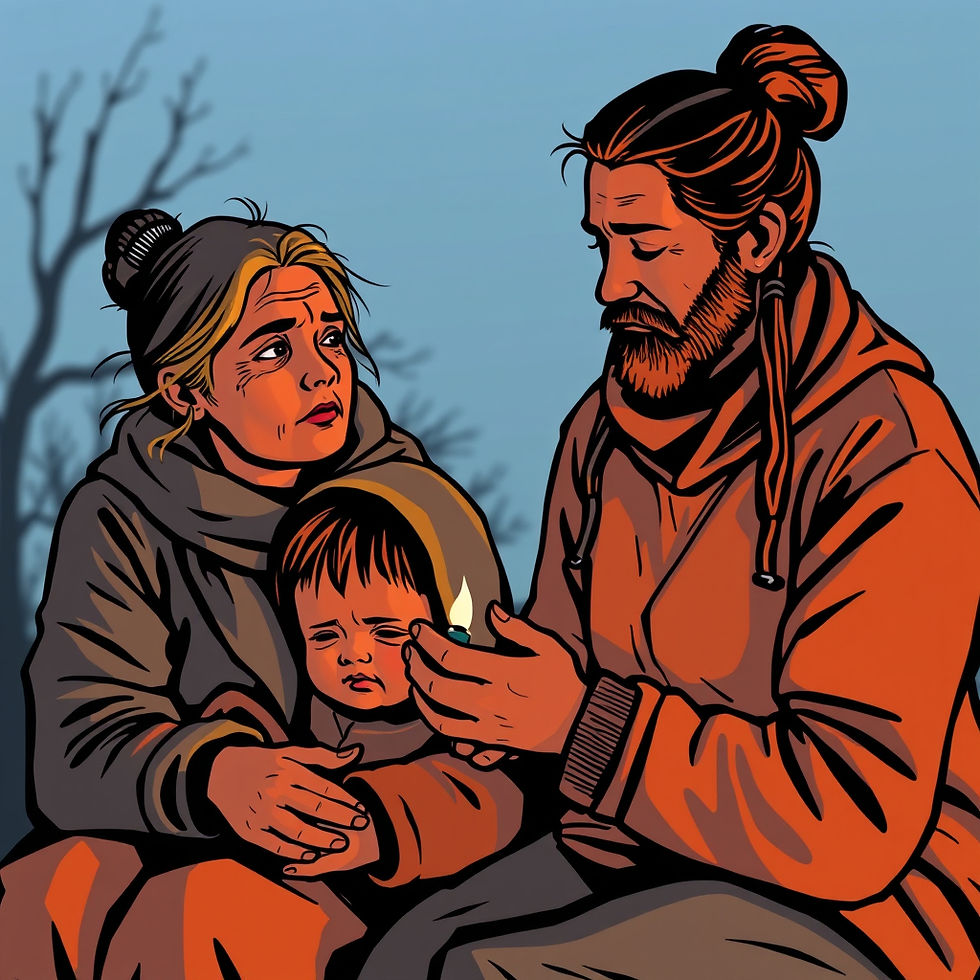
Loved ones cycle through homelessness, emergency rooms, and jail systems until a crisis occurs.
Sometimes that crisis is fatal.
Homelessness is not just a housing issue.
It is also a public health issue, a mental health issue, and a family issue.
A System That Recognizes Complexity
If we truly want to address homelessness, we must move beyond slogans and acknowledge the crisis's complexity.
outreach and engagement
emergency shelter and stabilization
addiction and mental-health treatment
transitional and recovery housing
permanent supportive housing
Different people require different forms of help at different moments in their lives.
Reducing the entire crisis to one policy approach ignores the reality on the ground.
Compassion Requires Honesty
My mother did everything she could to give her children a better life.
Millions of parents across this country are doing the same thing today under incredibly difficult circumstances.
Their effort deserves a system that works.
Housing is a critical part of that system. But pretending housing alone will solve homelessness ignores the deeper forces that push people into crisis.
Real solutions require honesty, compassion, and the courage to address the full complexity of the problem.
America will not end homelessness simply by relocating the crisis indoors.
We will end it when we build nationwide systems that help people tell their stories, stabilize, recover, and reclaim their futures without judgment.
Housing matters. But housing alone will not end homelessness.
The crisis on America’s streets is not just about shelter — it is about untreated illness, trauma, addiction, and isolation.
Real compassion means building systems strong enough to confront all of it.

Giovanne “Gio” Schachere is the Founder and CEO of Mysti’s Adult and Family Services, a multi-state organization providing housing stabilization and community-based support services to vulnerable adults and families across multiple states. His work and leadership have been featured in outlets including Business Insider and Dear Fathers, and he has been recognized with professional distinctions, including Marquis Who’s Who. Schachere is also the host of The Giovanne Show, where he discusses leadership, resilience, and solutions for strengthening communities. Author of this article -Housing Didn’t Save My Family — And It Won’t End America’s Homelessness Crisis
